
Hypoarousal Explained: Symptoms & Coping Tips
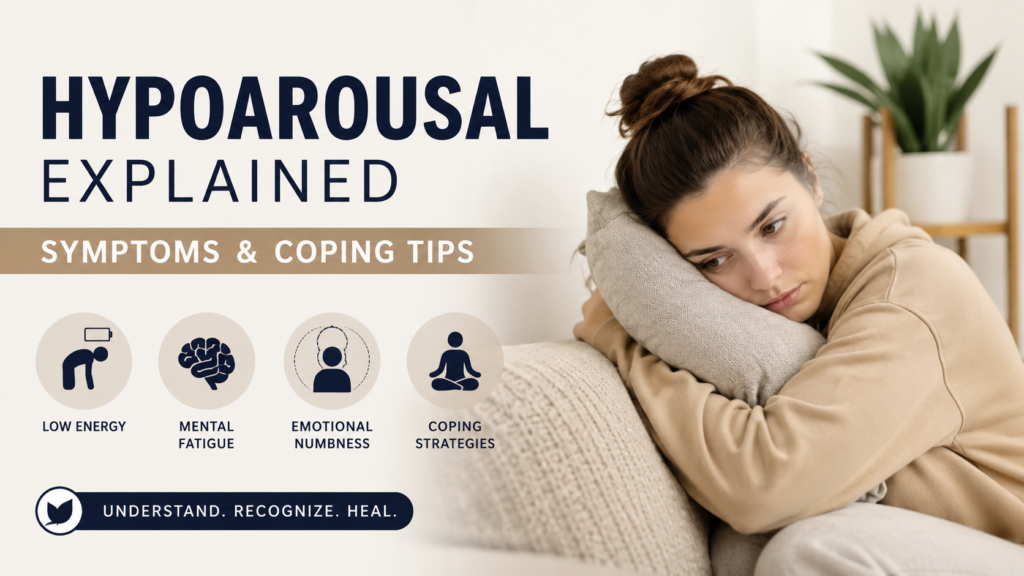
Hypoarousal is a state of reduced mental, emotional or physical activation that can leave a person feeling numb, disconnected, exhausted or unusually withdrawn. While hyperarousal can make you feel constantly alert or on edge, hypoarousal can feel more like your mind and body have slowed down.
Understanding hypoarousal can be especially useful when learning about trauma, stress, PTSD and the window of tolerance. This guide explains what is hypoarousal, common symptoms, the difference between hyperarousal and hypoarousal, coping skills, and practical ways to move towards a more regulated state.
What Is Hypoarousal?
Hypoarousal describes a state in which a person’s level of activation is lower than what is needed to feel fully engaged and responsive. Someone may experience low energy, emotional numbness, difficulty concentrating, detachment or a feeling of being mentally switched off.
The hypoarousal definition can vary depending on the context, but the term is commonly used in trauma-informed discussions of nervous-system regulation. It is important to understand that hypoarousal is not itself a standalone medical diagnosis.
Hypoarousal Meaning in Simple Terms
The simplest way to understand the hypoarousal meaning is to imagine your nervous system has an accelerator and a brake. Hyperarousal is like the accelerator being pressed too hard, while hypoarousal can feel like the brake has been pressed too strongly.
This does not mean that your nervous system is permanently damaged. Stress, trauma, exhaustion and several mental or physical health conditions can produce experiences that resemble hypoarousal.
Hypoarousal Symptoms
The exact hypoarousal symptoms can differ from one person to another. Some people mainly notice emotional changes, while others experience physical tiredness, difficulty thinking or a strong desire to withdraw.
Common hypoarousal symptoms may include:
- Emotional numbness
- Low energy or heavy fatigue
- Feeling disconnected from yourself
- Feeling disconnected from your surroundings
- Difficulty concentrating
- Slowed thinking
- Reduced motivation
- Social withdrawal
- Feeling frozen or shut down
- Difficulty reacting emotionally
- Feeling unusually sleepy
These symptoms are not unique to hypoarousal. Depression, poor sleep, medication effects, physical health problems and other conditions can cause similar experiences, so symptoms alone cannot establish a diagnosis.
Hypoarousal and the Nervous System
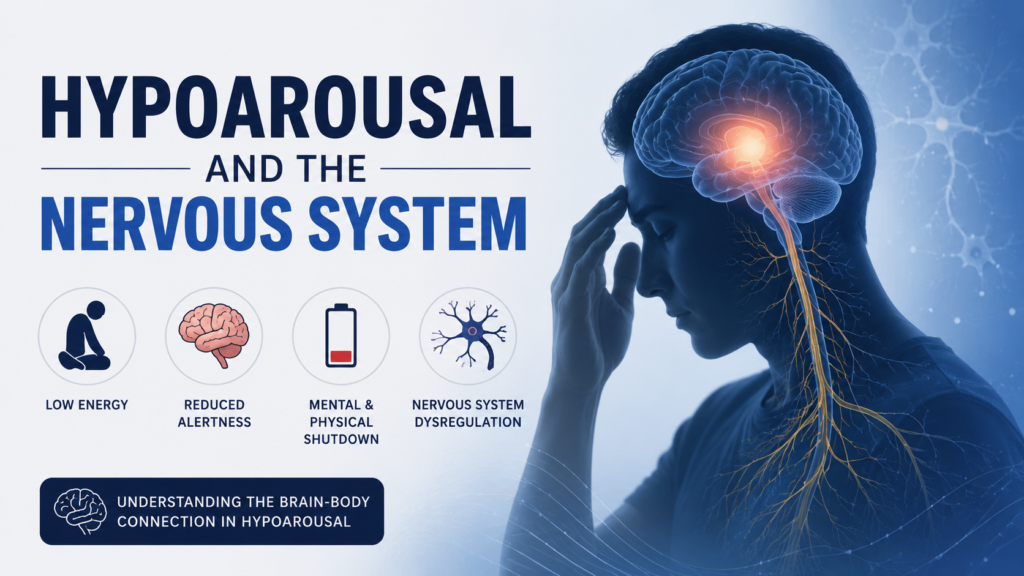
The hypoarousal nervous system concept is often discussed in relation to the autonomic nervous system, which helps regulate many automatic functions of the body. Trauma-informed models use arousal levels to explain why people can sometimes become highly activated or, at other times, feel shut down.
The idea is not that the nervous system simply has an “on” and “off” switch. Instead, hypoarousal is better understood as part of a wider pattern of nervous-system regulation and stress responses.
Hypoarousal Window of Tolerance
The window of tolerance describes a range in which a person can generally handle emotions and stress while remaining able to think, communicate and function. When someone moves outside this range, they may experience either hyperarousal or hypoarousal.
| State | Typical experience |
| Hyperarousal | Anxious, tense, alert or reactive |
| Window of tolerance | Present, focused and regulated |
| Hypoarousal | Numb, detached, tired or shut down |
The hypoarousal window of tolerance concept is useful because it shows that feeling overwhelmed and feeling completely switched off can both be responses to stress.
Hyperarousal vs Hypoarousal
Understanding hyperarousal vs hypoarousal makes the difference much easier to recognise. Hyperarousal is generally associated with excessive activation, while hypoarousal involves reduced activation.
| Feature | Hyperarousal | Hypoarousal |
| Energy | High or restless | Low or slowed |
| Thoughts | Racing | Slowed or foggy |
| Emotions | Intense | Numb or muted |
| Body | Tense and activated | Heavy or tired |
| Behaviour | Reactive | Withdrawn |
| Attention | Hyper-alert | Difficult to engage |
The hyperarousal vs hypoarousal distinction is a simplified model. A person can move between these states depending on the situation, stress level and individual circumstances.
Hyperarousal and Hypoarousal
Hyperarousal and hypoarousal are often discussed together because they can represent very different responses to overwhelming stress. Someone may feel extremely alert and anxious at one point and later feel exhausted, disconnected or emotionally numb.
This means hyperarousal and hypoarousal do not necessarily describe permanent states. A person can experience different levels of activation over time, particularly during periods of significant stress.
Hypoarousal Trauma Response
A hypoarousal trauma response may involve feeling emotionally numb, disconnected, frozen or unable to react normally after overwhelming experiences. For some people, this can feel confusing because they may expect trauma to always produce fear, panic or visible distress.
However, trauma responses can vary significantly. Hypoarousal can be discussed alongside other trauma responses such as hyperarousal, avoidance and dissociation, depending on the person’s experiences.
Hypoarousal PTSD
The term hypoarousal PTSD is sometimes used when discussing low-activation or shutdown-like experiences associated with PTSD. PTSD itself is a recognised mental health condition with a specific group of symptoms, including intrusive memories, avoidance, mood changes and increased alertness.
Not everyone experiencing hypoarousal has PTSD, and not everyone with PTSD experiences prominent hypoarousal. A qualified professional is best placed to determine whether symptoms meet the criteria for PTSD or another condition.
Autonomic Hypoarousal
Autonomic hypoarousal is terminology sometimes used when discussing reduced physiological activation within the context of autonomic nervous-system regulation. The autonomic nervous system helps control functions such as heart rate, digestion and breathing.
The term autonomic hypoarousal should not be interpreted as meaning that one specific part of the nervous system has simply “stopped working”. Human nervous-system responses are considerably more complex.
What Causes Hypoarousal?
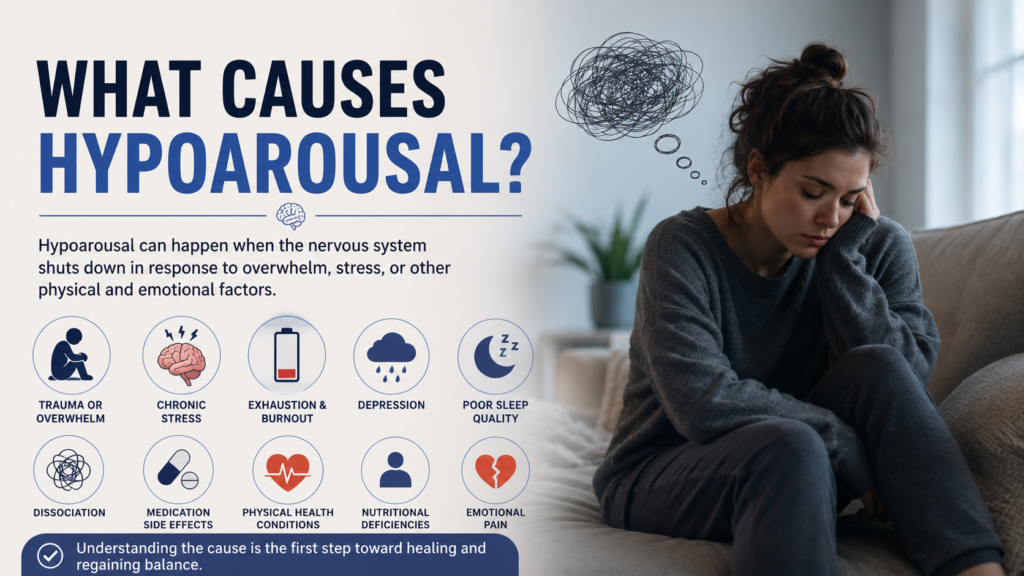
There is no single cause of hypoarousal. Experiences that resemble hypoarousal can occur in connection with overwhelming stress, trauma, emotional exhaustion, sleep problems and several mental or physical health conditions.
Possible contributors include:
- Traumatic experiences
- Chronic stress
- Emotional overwhelm
- Poor sleep
- Burnout
- Depression
- Dissociation
- Certain medications
- Physical health conditions
- Persistent emotional distress
Because so many conditions can produce similar symptoms, persistent hypoarousal should not automatically be attributed to trauma.
Chronic Hypoarousal
Chronic hypoarousal refers to a persistent or frequently recurring pattern of low activation, emotional numbness, withdrawal or shutdown-like experiences. If these feelings continue for a long period, they can begin to interfere with work, education, relationships and everyday responsibilities.
If you experience what feels like chronic hypoarousal, consider discussing it with a healthcare professional. Finding the underlying cause is more useful than simply applying a label to the symptoms.
Stuck in Hypoarousal
Being stuck in hypoarousal can feel like knowing what you need to do but being unable to start. You may want to study, work, exercise or socialise but feel as though your body and mind are refusing to engage.
People who feel stuck in hypoarousal may describe themselves as switched off, disconnected, exhausted or emotionally flat. These experiences should not automatically be interpreted as laziness or a lack of discipline.
How to Get Out of Hypoarousal
If you’re wondering how to get out of hypoarousal, the goal is usually not to force yourself into an extremely energetic state. Instead, gentle movement towards greater awareness, engagement and regulation may be more practical.
Try starting with one or two simple activities:
- Stand up and stretch
- Take a short walk
- Open a window or go outdoors
- Drink some water
- Talk to someone you trust
- Use a simple grounding exercise
- Return to a basic daily routine
- Do one small, manageable task
If hypoarousal symptoms are persistent, severe or affecting your ability to function, self-help strategies should not replace professional assessment.
Hypoarousal Coping Skills
Useful hypoarousal coping skills are generally simple enough to use when concentration and motivation are low. The aim is to create manageable engagement rather than overwhelming yourself with a long list of activities.
| Coping skill | Potential benefit |
| Gentle movement | Encourages physical engagement |
| Grounding | Directs attention towards the present |
| Social connection | Reduces isolation |
| Outdoor time | Provides sensory stimulation |
| Daily routine | Creates structure |
| Simple tasks | Builds manageable momentum |
| Regular sleep | Supports consistent routines |
Different hypoarousal coping skills work for different people. If a particular technique makes you feel more detached or uncomfortable, stop and try something gentler.
Tools for Hypoarousal
When looking for tools for hypoarousal, keep your toolkit practical. You do not need expensive equipment or complicated routines to begin supporting yourself.
A simple toolkit might include:
- A short grounding exercise
- A comfortable place to sit
- Water
- A simple movement routine
- A daily schedule
- A trusted person to contact
- A list of activities that help you reconnect
- Time outdoors
These tools for hypoarousal are supportive strategies rather than medical treatments. Persistent symptoms should be assessed according to their underlying cause.
Hypoarousal Treatment
There is no single hypoarousal treatment because hypoarousal is a descriptive concept rather than one specific diagnosis. The appropriate treatment depends on what is causing the symptoms.
For example, trauma-related conditions may be treated with evidence-based psychological therapies, while depression, sleep problems or physical health conditions may require different approaches. A healthcare professional can help determine the most appropriate option.
Can Hypoarousal Go Away?
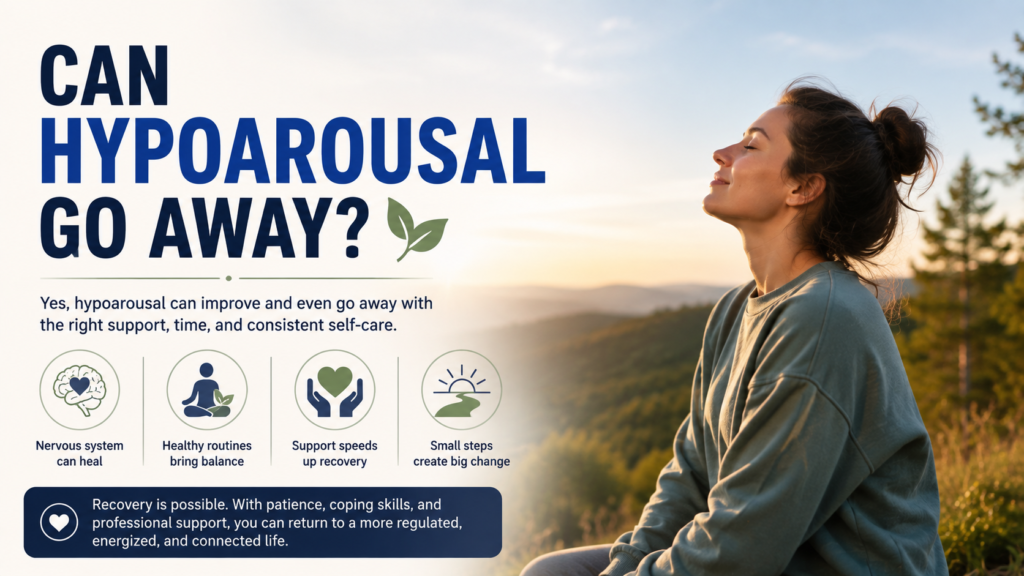
In many cases, stress-related symptoms can improve with appropriate support, healthier routines and treatment when necessary. Recovery is not always immediate, and progress can vary from person to person.
If hypoarousal continues for weeks or months or significantly affects everyday life, getting professional support is an important step. You do not need to wait until symptoms become severe before asking for help.
Hypoarousal vs Hyperarousal: Which Is Worse?
Neither hypoarousal vs hyperarousal is automatically worse. They represent different patterns of activation and can affect people in different ways.
Hyperarousal may make someone feel constantly alert, anxious or reactive, while hypoarousal may make someone feel disconnected, numb or unable to respond. Both can become problematic when they interfere with daily functioning.
Final Thoughts
Hypoarousal can be difficult to recognise because it may not look like obvious distress. Instead of appearing anxious or panicked, a person may seem quiet, tired, detached or emotionally distant.
Understanding hypoarousal can help people recognise these experiences without immediately blaming themselves. If you frequently feel numb, disconnected, shut down or unable to function, particularly following significant stress or trauma, consider speaking with a qualified healthcare professional.
This article is for educational purposes only and is not intended to diagnose, treat or replace professional medical or mental health advice.
Frequently Asked Questions
What is hypoarousal?
Hypoarousal is a state of reduced activation that may cause numbness, fatigue, detachment, low motivation, or difficulty engaging.
What does hypoarousal mean?
Hypoarousal meaning refers to a lower level of emotional, mental, or physiological activation than a person normally needs to feel engaged.
What are the main hypoarousal symptoms?
Common hypoarousal symptoms include emotional numbness, fatigue, slowed thinking, low motivation, detachment, and social withdrawal.
What is the difference between hyperarousal and hypoarousal?
Hyperarousal involves excessive activation and alertness, while hypoarousal involves reduced activation, numbness, or shutdown-like feelings.
Can trauma cause hypoarousal?
Yes, trauma can be associated with hypoarousal and other changes in emotional and nervous-system regulation.
How to get out of hypoarousal?
Gentle movement, grounding, sensory engagement, social connection, and predictable routines may help support a more regulated state.
Can hypoarousal be related to PTSD?
Yes, hypoarousal can occur alongside trauma-related conditions such as PTSD, although hypoarousal itself is not the same as PTSD.
What are useful hypoarousal coping skills?
Useful hypoarousal coping skills can include grounding, gentle exercise, social connection, regular routines, and professional support.